

US WWII Signal Corps Lamp EE-84
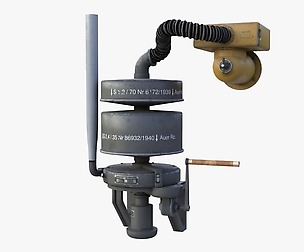
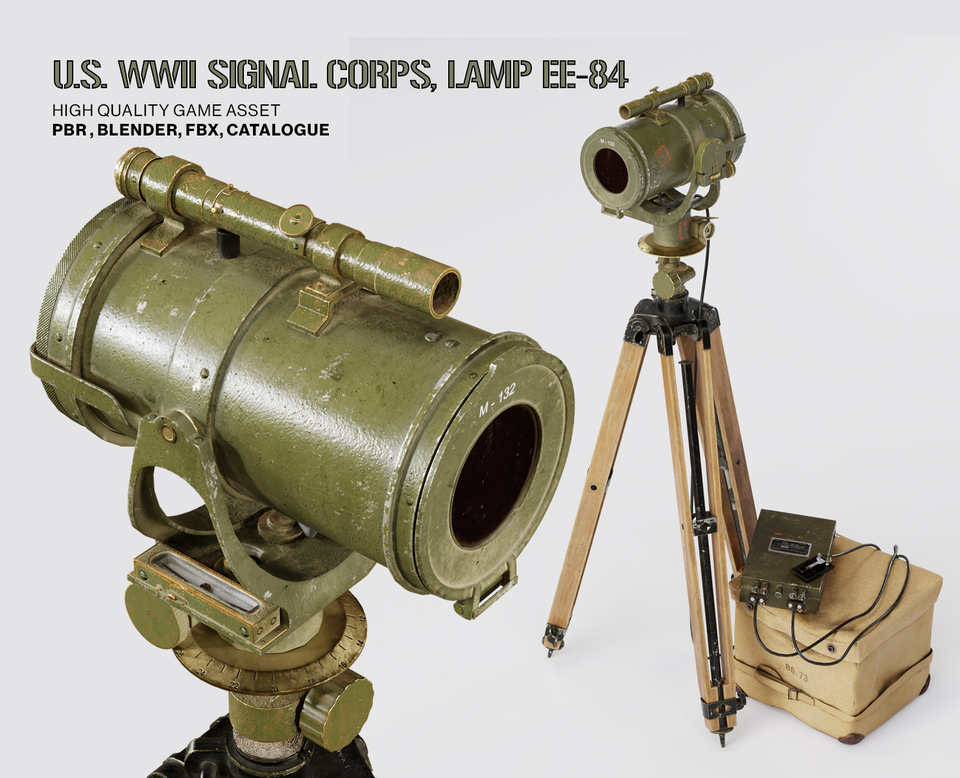
U.S. WWII Signal Corps, Lamp EE-84 high quality game ready 3D model, Available in low and high poly blender and FBX format. High poly version is subdivision ready, PBR 4k textures consisting of base color, Alpha, Displacement, Metallic, Normal and Roughness painted in substance painter. This product includes a Blender file, FBX exports, PBR material, info text and poster of product. Introduction EE-84 signal lamp is the sign to transmit morse code (blinker code) by day and night. The whole set weighs about 19 kilos and it has a range about the 4.5 kilometers in the sunlight the range of course longer at nighttime and it can be used by red or white flashes when the red flashes are using the Range is cut in half and for directing the light beam there's a telescopic site on top of the lamp the mount that is here is complete with leveling blub, micrometer scale and compass and tripod can also be used with the M65 telescope. Signal lamps like the ee84 is mainly used by field and coast artillery units, but during World War 2 it seems signal lamps like EE-84, was mostly used by already known as short party also known as beach master units, during amphibious operations the short party is responsible for ship to short communications and they also coordinate all the logistics on the beach.
EE-84 Signal Lamp Equipment The M-132 Signal Lamp, MC-430 Filter, M-172 Goggles, J-46 Key, FT-159 Lamp Mount, CD-332 cord, Tripod type G, with bronze head Note the filter and goggles are common with the M-227. The Goggles are not used with filters. The MC-430 filters can be fitted to binoculars. Uses signal lamp, day and night, field and coast artillery units History A signal lamp (sometimes called an Aldis lamp or a Morse lamp) is a visual signaling device for optical communication by flashes of a lamp, typically using Morse code. The idea of flashing dots and dashes from a lantern was first put into practice by Captain Philip Howard Colomb, of the Royal Navy, in 1867. Colomb's design used limelight for illumination, and his original code was not the same as Morse code. During World War I, German signalers used optical Morse transmitters called Blinkgerät, with a range of up to 8 km (5 miles) at night, using red filters for undetected communications.
Specifications
Objects: 123
Vertices: 43737
Edges: 86135
Faces: 42403
Quad: 41700
Triangles: 703
Total triangles: 84322
Material: 1
Textures Format: png
Model Details
- FormatsFBX, BLEND
- Polygons42403
- Vertices43737
- animatedno
- materialsyes
- texturesyes
- riggedno
- uvsyes
- 3d print readyno
You will get 1 file
All files previously purchased will always be available for download in your Library